


Rabby Extension Download, Token Approval Management, and the Real Logic of Gas Optimization
The common misconception is that installing a crypto wallet extension is mainly a matter of clicking “Download,” connecting a browser, and approving transactions. In DeFi, the harder problem begins after installation. A wallet is not merely a place where assets appear; it is the interface through which permissions are granted, transaction data is interpreted, and fees are accepted under changing network conditions. That makes the Rabby extension download a security decision as much as a software decision.
For US-based DeFi users, the distinction matters because a single wallet may interact with decentralized exchanges, lending markets, bridges, staking contracts, and unfamiliar applications. Each interaction can create a different permission relationship. The practical goal is therefore not to approve every request quickly or to chase the lowest displayed gas number. It is to understand what the wallet is authorizing, how long that authorization lasts, and whether the economic benefit of a transaction justifies its security and execution risk.
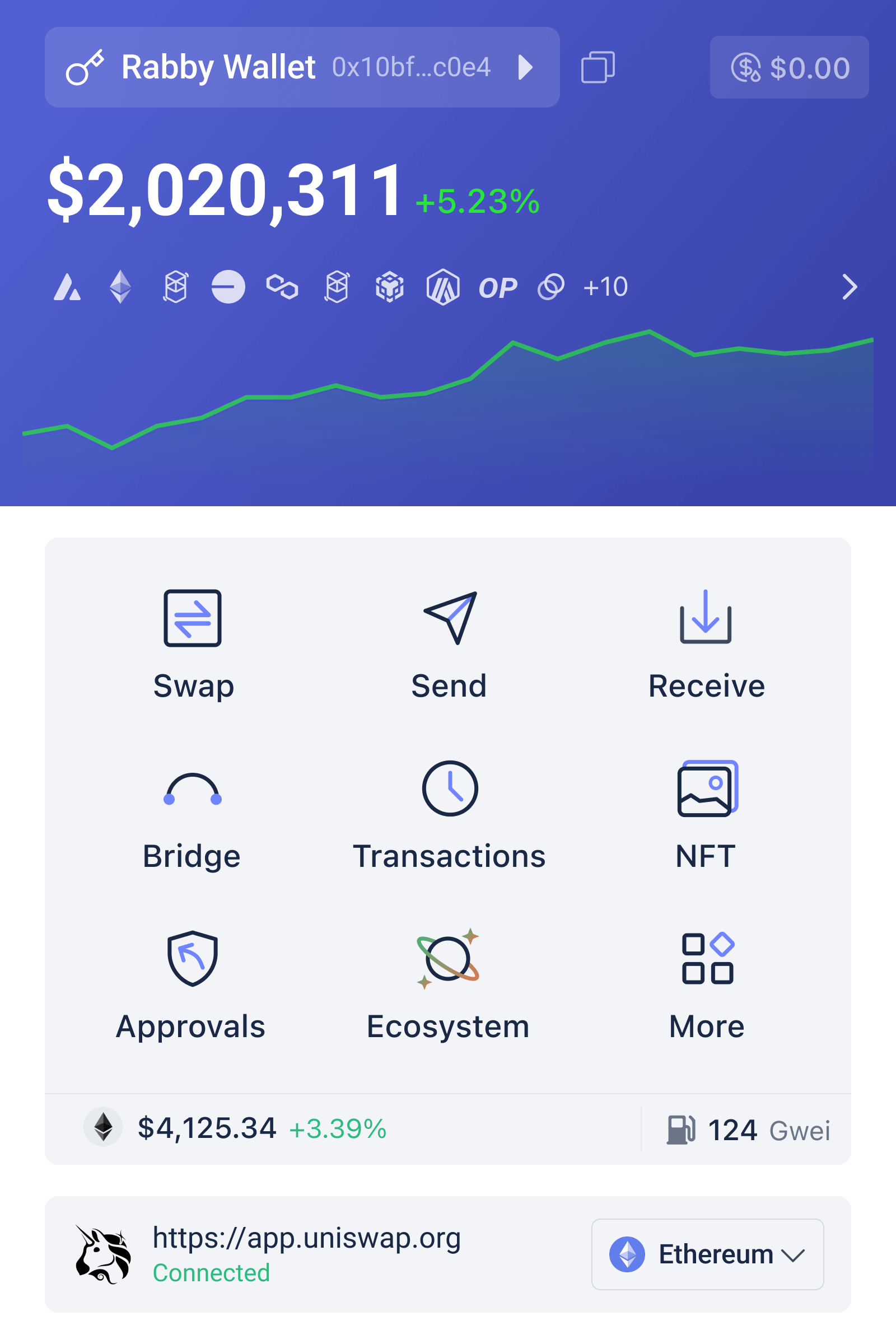
Downloading a wallet is the first control, not the final safeguard
A browser extension has privileged access to the websites where a user initiates financial actions. That does not mean the extension can freely spend funds without a signature, but it does mean that a counterfeit extension, malicious website, or misleading prompt can place the user in a dangerous decision environment. The first boundary is therefore source verification. Users should reach the wallet’s official distribution page through a trusted route, confirm the publisher and browser details, and avoid search advertisements, unsolicited messages, and cloned pages that imitate familiar branding.
A careful installation process also separates wallet creation from wallet use. A new wallet should be backed up through its recovery method before it is funded, and the recovery phrase should never be entered into a website, support chat, or ordinary browser form. Hardware wallets can add a separate signing boundary for larger balances, although they do not make a malicious transaction harmless. The user still has to inspect what is being signed. Security is layered: software provenance, recovery-phrase protection, transaction review, and sensible exposure limits each address a different failure mode.
Once installed, the rabby wallet extension can serve as a decision screen between an application and the blockchain. That role is more important than the extension’s visual design. The blockchain executes encoded instructions, not the plain-language intention a user may have in mind. A swap request, for example, can contain a token approval, a contract call, a recipient address, a minimum-output condition, or several actions bundled together. The wallet helps translate that structure, but the user remains responsible for deciding whether the destination and conditions make sense.
Token approvals are permissions, not payments
The most useful mental model for token approvals is a delegated spending limit. Many ERC-20 tokens use an allowance mechanism: a token holder authorizes a spender contract to transfer up to a specified amount on the holder’s behalf. The token does not leave the wallet when the approval is created. Instead, the contract receives permission to request transfers later, subject to the allowance and the token’s own implementation.
This distinction explains why approval management deserves separate attention. A user might approve a decentralized exchange before making a swap, yet the approval can remain active afterward. If the approval is unlimited, the contract may retain permission to move future holdings of that token, not only the amount used in the original transaction. That does not prove the contract will misuse the permission. It does mean that a later vulnerability, compromised control system, or interaction with a malicious contract could expand the consequences of an otherwise ordinary approval.
Approval risk also has a time dimension. A wallet can be secure today while an old allowance remains unnecessary months later. Users who rotate between applications often accumulate permissions across multiple chains and tokens without realizing that the list is becoming a map of historical trust. Reviewing approvals is therefore closer to access management in a financial system than to cleaning up a transaction history. The question is not “Did I use this application?” but “Does this contract still need the ability to move this asset?”
Allowance size creates a security–convenience trade-off
A limited approval reduces the amount exposed if the spender is later abused, but it may require another approval when the user trades again. Each additional approval is itself a transaction, with its own gas cost and opportunity for error. Unlimited approvals reduce friction and can avoid repeated setup costs, but they create a broader and potentially longer-lived permission. Neither choice is universally correct. A small experimental position and a high-value long-term holding should not automatically receive the same treatment.
A practical approach is to match the allowance to the application, asset, and expected use. For a one-time interaction with an unfamiliar protocol, a limited approval may be the more rational default. For a well-understood application used frequently, a larger allowance may be defensible if the user accepts the residual contract risk and reviews it periodically. The key is deliberate scope, not the simplistic belief that every unlimited approval is immediately dangerous or that every familiar protocol is permanently safe.
Revoking approvals is useful, but it is not free risk removal
Revoking an approval generally means submitting another on-chain transaction that changes the allowance, often to zero. That transaction consumes gas. On Ethereum mainnet, the fee may be material during congestion; on many layer-2 networks it may be lower, though it is not necessarily zero. Revocation also does not reverse transfers that already occurred, repair a compromised private key, or neutralize a contract call that has already executed.
This limitation is easy to miss. Approval revocation addresses one specific permission state. It does not cleanse every possible authorization, including signature-based permissions or approvals handled through token standards and application-specific systems that do not behave identically. It also does not make a deceptive website trustworthy. A user who signed a malicious transaction may need a broader incident response: stop using the exposed wallet, move remaining assets when safe, inspect other permissions, and determine whether the recovery phrase or private key was compromised.
Revocation is most valuable when it is prioritized rather than performed mechanically. Users can begin with high-value tokens, unfamiliar spenders, dormant wallets, and permissions that exceed any plausible use. The cost of the cleanup should be weighed against the value and sensitivity of the assets. A wallet containing a small experimental balance may justify a different maintenance schedule from a wallet used to hold a substantial portion of a household’s savings.
Gas optimization starts with transaction design
Gas is the computational resource used to process transactions on an Ethereum-compatible network. The amount paid depends broadly on the work required by the transaction and the network’s current pricing conditions. This produces an important correction to a common misconception: gas optimization is not simply choosing a lower fee in the wallet window. A lower fee setting can increase the chance of delayed execution or failure, while a badly designed transaction may consume more gas regardless of the selected price.
Approval strategy is one place where transaction design affects total cost. A swap may require an approval followed by the swap itself, producing two transactions. Some applications support a signature-based approval flow that can combine authorization more efficiently at the application level, but this introduces a different review problem: the user may be signing an off-chain message whose consequences are less familiar than a standard transaction. The potential reduction in clicks or gas should not be treated as a free improvement. The message’s spender, token, amount, and expiration conditions still require scrutiny.
Network selection also changes the optimization problem. A transaction that is expensive on Ethereum mainnet may be economically reasonable on a layer-2 network, but bridging funds, managing liquidity, and accepting different application or settlement assumptions can offset part of the savings. A cheaper execution environment is not automatically better if the user must move assets unnecessarily, faces thin liquidity, or takes on a contract and bridge risk that exceeds the fee saved.
Timing can help, but it is not a guaranteed strategy. Network demand often changes quickly around market volatility, popular token launches, liquidations, or major protocol events. Waiting for calmer conditions may reduce the fee, but it can also cause a user to miss a price, liquidation window, or time-sensitive opportunity. The sensible question is not “Can I minimize gas at all costs?” It is “What is the expected cost of delay compared with the fee premium for executing now?”
A reusable framework for reviewing a DeFi transaction
Before signing, users can apply a four-part review. First, identify the asset and amount that could move. Second, identify the spender or destination and ask whether it matches the application’s stated purpose. Third, check whether the request is an approval, a transfer, a swap, a contract interaction, or a signature that may create a future permission. Fourth, compare the transaction’s economic value with its gas cost and the downside if the action fails or produces an unexpected result.
This framework is intentionally slower than blind confirmation, but it is not meant to turn every small transaction into a forensic investigation. The level of review should scale with exposure. A low-value routine action on a familiar application may need a quick confirmation. A first interaction with a new protocol, a large token approval, or a bridge transaction deserves more time. The non-obvious point is that transaction size and permission size are different variables: a tiny initial swap can still create a large future allowance.
Users should also distinguish simulation from certainty. Wallet previews and simulations can reveal likely balance changes, contract destinations, and suspicious outcomes, making them valuable screening tools. They depend, however, on the available state, the quality of the interpretation, and the behavior of the contracts involved. A preview is evidence about an expected execution path, not a mathematical guarantee that every future condition or external event will be harmless. If a result is unclear, stopping is a valid outcome.
What matters next for wallet users
No recent project-specific news is available for the current eligible week, so there is no responsible basis for attributing a new Rabby development or weekly feature change here. The broader direction of DeFi wallet design is nevertheless clear as a conditional implication: as applications use more complex permissions, bundled actions, and signature-based workflows, wallets will be judged increasingly by how well they explain authority rather than by how quickly they approve transactions.
If that trend continues, users should watch for clearer distinctions among one-time approvals, persistent allowances, delegated permissions, and signatures with expiration conditions. They should also expect trade-offs to remain. More detailed warnings can reduce dangerous mistakes, but excessive alerts may train users to dismiss warnings. Better automation can improve convenience, but automated approval cleanup or fee selection still requires assumptions about asset value, protocol trust, and network conditions.
The durable lesson is straightforward. Downloading a wallet extension establishes an interface; it does not establish trust in every application reached through that interface. Token approvals are permissions that should be scoped and revisited. Gas optimization is a decision about total execution cost, timing, and failure risk—not merely a search for the smallest number in a fee field. DeFi becomes more manageable when users treat each signature as a specific grant of authority and review that authority with the same care they would apply to access permissions in any other financial system.
Frequently Asked Questions
Should I revoke every token approval after using a DeFi application?
Not necessarily. Revoking every approval can create extra transactions and gas costs, while repeated approvals may add friction. Prioritize large allowances, unfamiliar contracts, dormant applications, and wallets holding meaningful value. For frequently used and well-understood applications, a deliberate allowance may be reasonable, provided it is reviewed periodically.
Does a lower gas setting always save money?
No. A lower fee may reduce the price paid if the transaction confirms normally, but it can also delay execution or fail, potentially causing a missed opportunity or requiring another transaction. Gas optimization should consider urgency, network conditions, transaction complexity, and the cost of failure rather than focusing only on the displayed fee.
Can a wallet extension guarantee that a DeFi transaction is safe?
No wallet can eliminate smart-contract risk, phishing, compromised keys, or misleading application behavior. Transaction previews and warnings can improve decision quality, but they are interpretive tools. Users must still verify the source of the extension, protect recovery credentials, inspect permissions, and avoid signing requests they do not understand.

Related Posts

Flagman Casino Auszahlung und Verifizierung mit 50% Bonus bis 300 Euro →
5 Lions Megaways: Kurze, intensive Sessions und wie Spieler sie wirklich nutzen →
Ist Sugar Casino sicher? Lizenz, Betreiber und was vor der ersten Einzahlung zählt →

